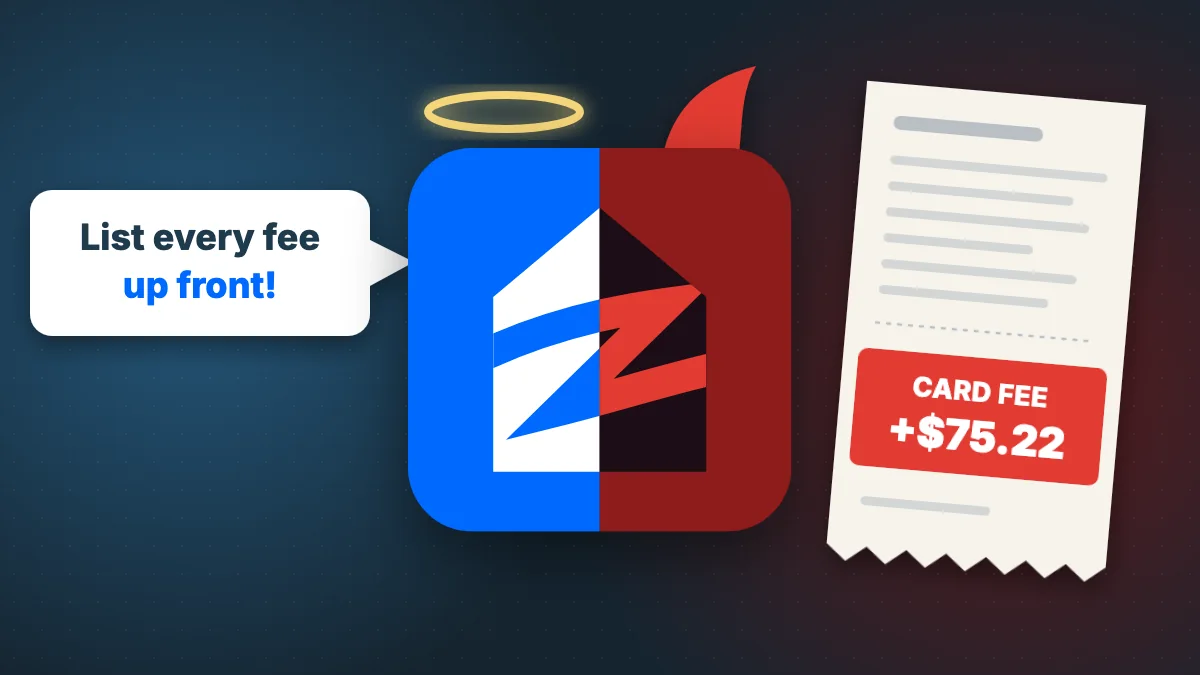
Zillow recently held its Unlock conference, where the company spent half a day lecturing property managers about fees. Its own research said 96% of renters want every fee listed up front. Hide a fee until the end, and you lose the renter’s trust (and maybe the renter).
Meanwhile, Zillow is in federal court defending a proposed class action over a fee that allegedly doesn’t show up until the last screen of checkout!
What the lawsuit says
The plaintiff, Sara Nour, is a former Washington, DC renter who paid her $2,550 monthly rent through Zillow Rental Manager. That’s Zillow’s own platform for landlords who self-manage: list the unit, screen applicants, sign the lease, collect rent. (Yes, it competes with us.)
According to the suit, filed in May and amended in July, Zillow tacked a transaction fee onto her payment at the very last step of checkout, labeled it a “card fee” on her receipt, and never made clear that the fee was optional or how to pay without it. One month it came to $75.22.
That works out to 2.95% of her rent. If she paid it every month for a year, she spent roughly $900 for the privilege of paying rent.
Nour says she assumed the fee was mandatory. Nobody told her otherwise at lease signing or at payment, and she would have paid another way if she’d known. Her lawyers call the fee “untimely disclosed, misleadingly disclosed, excessive and unlawfully charged.” The complaint also argues the fee amounts to extra rent her lease never mentioned.
She wants to represent every renter who paid it, and she’s asking for over $5 million in restitution, damages and attorney fees, a court order making Zillow stop, and a jury trial.
One catch: this is still a proposed class action. A judge has to certify the class before Nour can sue on behalf of anyone but herself, and the case has to survive Zillow’s motion to dismiss before that fight even starts.
Zillow’s side
In late September, Zillow asked the court to toss the case as “meritless.” They argue the fee is fully disclosed, renters can avoid it, and nobody forced Nour to pay through Zillow in the first place.
A Zillow spokesperson said in an emailed statement that bank transfer is the free default in Rental Manager, and that card fees are “optional and clearly disclosed before payment.” Nour has until November 12 to respond to Zillow’s motion.
I haven’t seen the checkout screens, and I’m not a lawyer. If ACH is the free default and the card fee shows up before you commit, that’s a reasonable setup, and Zillow may win. The case may come down to what that screen looked like.
Check your own checkout
This part applies to you. Most of us collect rent through a resident portal in our PM software, and plenty of those platforms charge residents a convenience fee to pay by card. Put your company’s name in place of Zillow’s in this complaint and ask whether it still reads like a lawsuit someone could file.
It’s worth 15 minutes before the next rent cycle:
- Pay rent like a resident. Have someone on your team make a card payment through the portal and screenshot the screen where the fee first appears.
- Provide at least one free option, and make it obvious. ACH should be the default, and residents shouldn’t have to hunt for it.
- Disclose ALL fees on the rental listing, application, and lease. Nour’s lawyers are arguing the fee is extra rent her lease never disclosed. Name the payment methods, which ones carry a fee, and how much.
- Tell them at move-in. One line in your welcome email about how to pay rent for free costs you nothing.
We all know renters want the whole number up front (no survey required). Just give it to them.
Want the long version?
Start with The Zillow Problem, then why we stopped paying for Feed Connect, then the very first episode of The Crane Podcast, where Mark Brower and I asked whether Zillow is friend or foe.
I write about this stuff twice a week in my newsletter. Subscribe here, it’s free.