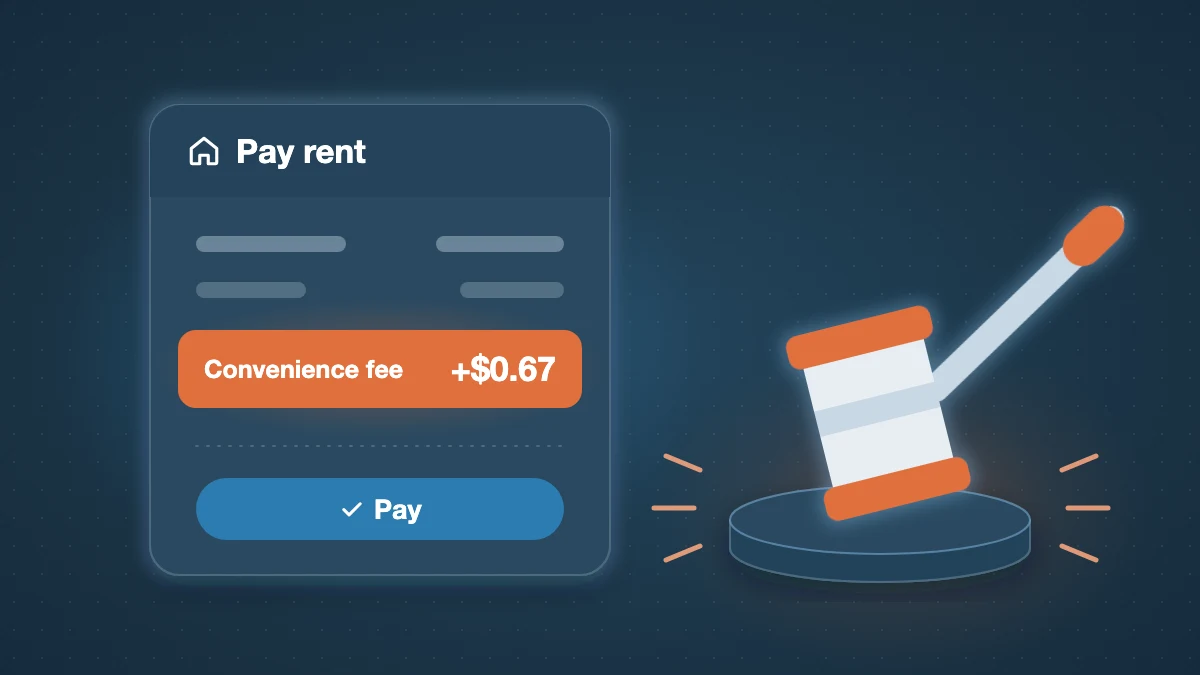
Sixty-seven cents.
That’s the “Convenience Fee” a Sacramento renter paid on top of an ACH rent payment. On November 20, a federal judge decided it was enough to let her class action against RealPage move forward.
It’s the first time I’ve seen a judge let one of these fee claims through, and there are more junk-fee lawsuits in flight against property management software companies, the ones whose software sits between our residents and their rent. Most of them make the same argument: the resident got charged by a software company they never chose to do business with, for doing something their lease required them to do (pay rent).
I’m tracking seven cases as of late November 2026. I’m not a lawyer, so treat this as reporting and run anything that affects your company by yours.
| Case | Fee at issue | Status |
|---|---|---|
| Maravillas v. RealPage | $0.67 ACH “Convenience Fee” (Propertyware) | Moving forward. Judge let the California consumer-protection and unjust-enrichment claims proceed (Nov 20). |
| Nour v. Zillow | $75.22 card fee on $2,550 of rent | Pending. Zillow’s motion to dismiss; renter’s response due Dec 14. |
| Clark v. Innago | About 2.99% on cards, $2 on ACH | Pending. Moved to the Southern District of Ohio; motion to dismiss fully briefed. |
| Mosley v. Yardi | How RentCafe discloses payment fees | Being amended. Dismissed with leave to amend (Sep 11); new complaint requested by Nov 27. |
| Comfort v. AppFolio | Hidden transaction fees | Dropped. Plaintiff voluntarily dismissed it (Jul 23). |
| Fish v. Entrata | RentPlus credit reporting, $8.95+ a month | Pending. Entrata’s motion to dismiss; second plaintiff dropped out. |
| Madden v. Obligo | $178.80 and $262.90 deposit-alternative “Service Fees” | Paused. Stayed (Nov 17) while Obligo moves to compel arbitration. |
The 67-cent ruling against RealPage
In Maravillas v. RealPage, the renter paid rent by ACH through RealPage’s Propertyware platform and got charged $0.67 on top (where can I get that deal btw?).
Judge Daniel Calabretta let her California consumer-protection and unjust-enrichment claims proceed. His logic: if a fee shows up only at checkout, with nothing saying it’s optional, a renter could reasonably believe it’s a mandatory cost of paying rent.
RealPage pointed out that the lease let tenants pay by mail or in person. The judge didn’t buy it, since nobody told her those were the ways around the fee.
The judge did toss her tortious-interference claim (the lease never prohibited the fee) and her debt-collection claims (rent paid on time isn’t a “debt”).
The day after the ruling, the renters’ lawyers sent it to the judge in their Innago case, where Innago is still trying to get the case thrown out.
Checkout fees: Zillow, Innago, Yardi, and AppFolio
Four more cases fight over the same moment RealPage’s does: the fee a renter sees when they hit pay.
Zillow: a $75 card fee. In Nour v. Zillow, a renter paid $2,550 in rent through Zillow Rental Manager with a debit card and got charged a $75.22 “card fee” on top, roughly 3%. Her complaint says the fee came pre-selected and didn’t appear until the final Confirm screen.
I wrote about this case in October, right after Zillow spent two days at its Unlock conference telling property managers to disclose every fee up front. Zillow’s motion to dismiss the amended complaint is pending. Nour’s response is due December 14, with briefing running into mid-January.
Meanwhile, Zillow is marketing online rent payments directly to tenants, telling them to ask their landlord to accept rent through Zillow.
Innago: coming home to Ohio. A tenant in Lockport, NY filed Clark v. Innago over Innago’s “Convenience Fee,” which the complaint puts at about 2.99% on cards and $2 on ACH. The case started in New York federal court in July. In October, both sides agreed to move it to the Southern District of Ohio, since Innago is based in Cincinnati (just down I-71 from me). Innago filed its final brief on its motion to dismiss in late November, and that judge now has the 67-cent RealPage ruling in hand.
Yardi: show me the screens. Mosley v. Yardi is about how RentCafe discloses payment fees. On September 11, Judge Wesley Hsu granted Yardi’s motion to dismiss with leave to amend, then ordered Yardi to hand over the actual payment screens the three named plaintiffs saw. Yardi produced them October 9. The plaintiffs say the production has “deficiencies and discrepancies” and asked to push their new complaint to November 27.
My favorite detail: after that September hearing, Gibson Dunn (RealPage’s lawyers) ordered the transcript, and so did lawyers from Latham & Watkins and Greenberg Traurig. Two months later, the judge in the RealPage case took judicial notice of it. These cases are reading each other.
AppFolio: the one that went away. Comfort v. AppFolio was a hidden transaction-fee case against AppFolio. AppFolio moved to compel arbitration in May. The plaintiff’s opposition was due July 23, and that same day he voluntarily dismissed the case.
Fees beyond payments: Entrata’s RentPlus and Obligo
The last two cases target the product itself.
Entrata: RentPlus and the 80% opt-in. Fish v. Entrata is an interesting one. Entrata’s RentPlus reports rent payments to the credit bureaus for a monthly fee: at least $8.95 for one renter or $14.95 for two or more, according to the complaint, which Towards Justice filed in Colorado federal court.
In August 2020, RentPlus switched from opt-in to auto-enrollment through a lease addendum. Per the complaint, enrollment at Entrata customer properties went from about 16% to nearly 80%.
And the property manager gets a cut. The complaint cites Rent Dynamics’ own revenue calculator, which tells a 10,000-unit operator to expect $576,000 a year in RentPlus revenue, then capitalizes that at a 6% cap rate into $9.6 million of “added value” (real estate investor math).
Entrata moved to dismiss. It argues RentPlus isn’t a “credit repair organization” under the federal law the plaintiffs sued under, and that it posted the revenue sharing on its website. Entrata also moved to compel arbitration against the second plaintiff, Kelley Rowan. A month later, Rowan dropped out of the case and that motion went moot.
Obligo: arbitration first. Madden v. Obligo, filed October 7 in Manhattan federal court, is a class action over Obligo’s security-deposit alternative. Renters in Alabama and Iowa paid $262.90 and $178.80 in non-refundable “Service Fees.” The complaint says Obligo sells the product as a deposit replacement while leaving tenants on the hook for landlord claims and outside state deposit-law protections. It also says Obligo prices the fee with an algorithm fed by bank balances and credit history. Judge Jed Rakoff stayed the case on November 17 while Obligo moves to compel arbitration, with briefing into January.
One law firm behind six of the seven junk-fee lawsuits
KalielGold represents the renters in every case above except Entrata’s. Several of its complaints open with nearly the same paragraph about a cost-of-living crisis in housing. The Obligo complaint, about a security-deposit product, even accuses Obligo of charging a “billing fee and processing fee on rent payments through its payment platform.” Copy, paste, file.
At least two of the complaints attach the FTC’s December 2025 warning letter as an exhibit. The FTC sent that letter on December 8, 2025 to 13 PM software companies, warning that leaving mandatory fees out of advertised rent is illegal, with civil penalties of up to $53,088 per violation. It deals with listing prices more than payment fees. Still, it puts a federal regulator on record about fees inside our software, and that’s the page these lawyers keep attaching.
Who’s next
RealPage, Yardi, Entrata, AppFolio, and Innago are 5 of the 13 companies on the FTC’s warning-letter list, and all five are or were defendants (RealPage owns Buildium and Propertyware). The other eight: DoorLoop, Inhabit, TenantCloud, MRI, Rent Manager, TurboTenant, Market Apartments, and Jonah Systems.
KalielGold now has a federal judge saying a 67-cent ACH fee is enough to support a class action.
If you’re an operator, the renters in these cases are our residents. I’d run the same test I suggested after the Zillow suit: log into your portal as a resident and pay rent the way they do. Make a free option like ACH the default, disclose payment fees in your listings, applications, and leases, and tell residents about the free option at move-in. The RealPage ruling turned on that last point. Nobody told the renter how to avoid the fee.
If I ran one of those other eight software companies, I’d be screenshotting my own checkout page this week.
Have a scoop, lesson, or win to share? I’m looking for guest articles from PMs. Submit your idea here.
Adapted from Issue #219 of my newsletter. I write it twice a week for property managers, no fluff. Subscribe here.