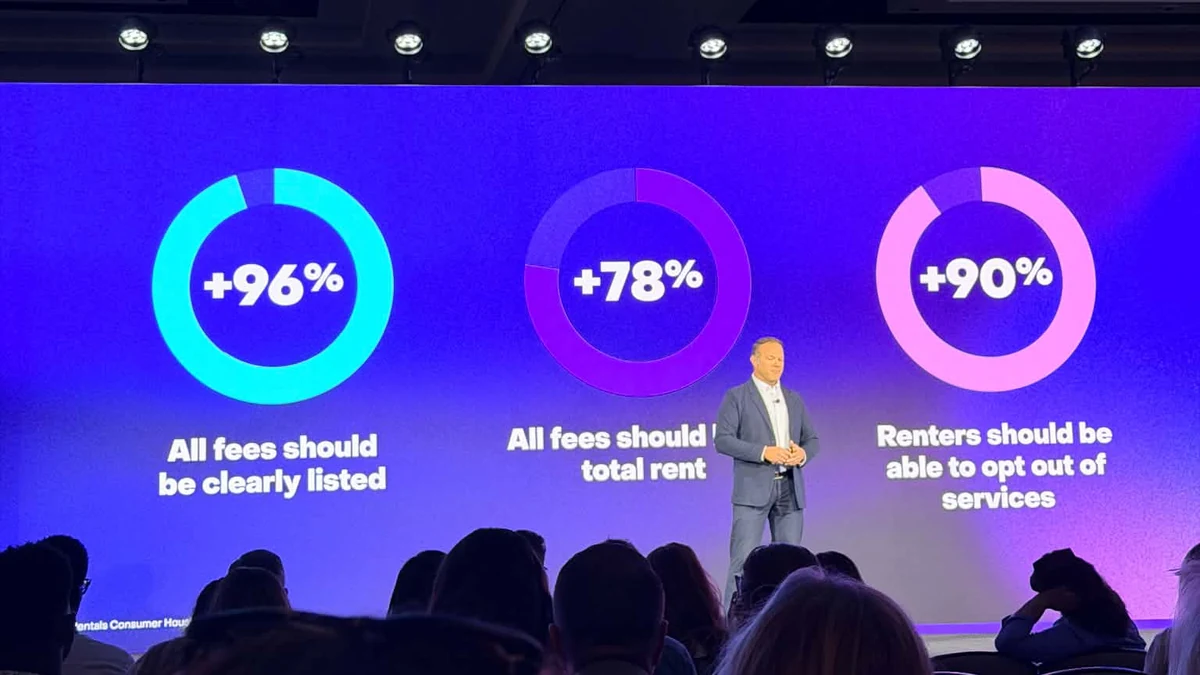
Zillow barred my reporter from its Unlock rental conference this week. Maybe they didn't like the alarm bells I've been ringing about their platform dominance.
I covered it anyway. Two property managers who were already attending sent me notes and recordings every night from the Arizona Biltmore in Phoenix. After Day 1, I asked on LinkedIn: Zillow spent the whole day telling property managers what renters want, but what does Zillow want? Day 2 answered that question. I'll get there, but the renter data deserves a look first, because a lot of it should change how you lease homes.
Your renter is older than you think
Zillow's research describes a renter who is more settled than most of us picture:
- Median renter age went from 32 in 2017 to 41 in 2026.
- More than half of renter households have pets, and one in three has a child under 18.
- Nearly two-thirds looked into buying before they decided to rent.
- 61% call commute convenience essential, a 10-year high (up from 52% in 2021). Zillow tied that to return-to-office mandates.
The people moving, though, skew young. Gen Z makes up only 28% of renters but accounted for nearly 50% of all movers last year. Your current residents trend older and often have pets or kids, while your next applicant is more likely to be in their twenties. Your listings and your renewal strategy are talking to different people.
Renters want the whole number
Fees came up in nearly every session. The average security deposit jumped from $795 to $1,000 in a single year (+26%). The share of renters paying fees of any kind rose from 60% to 70%.
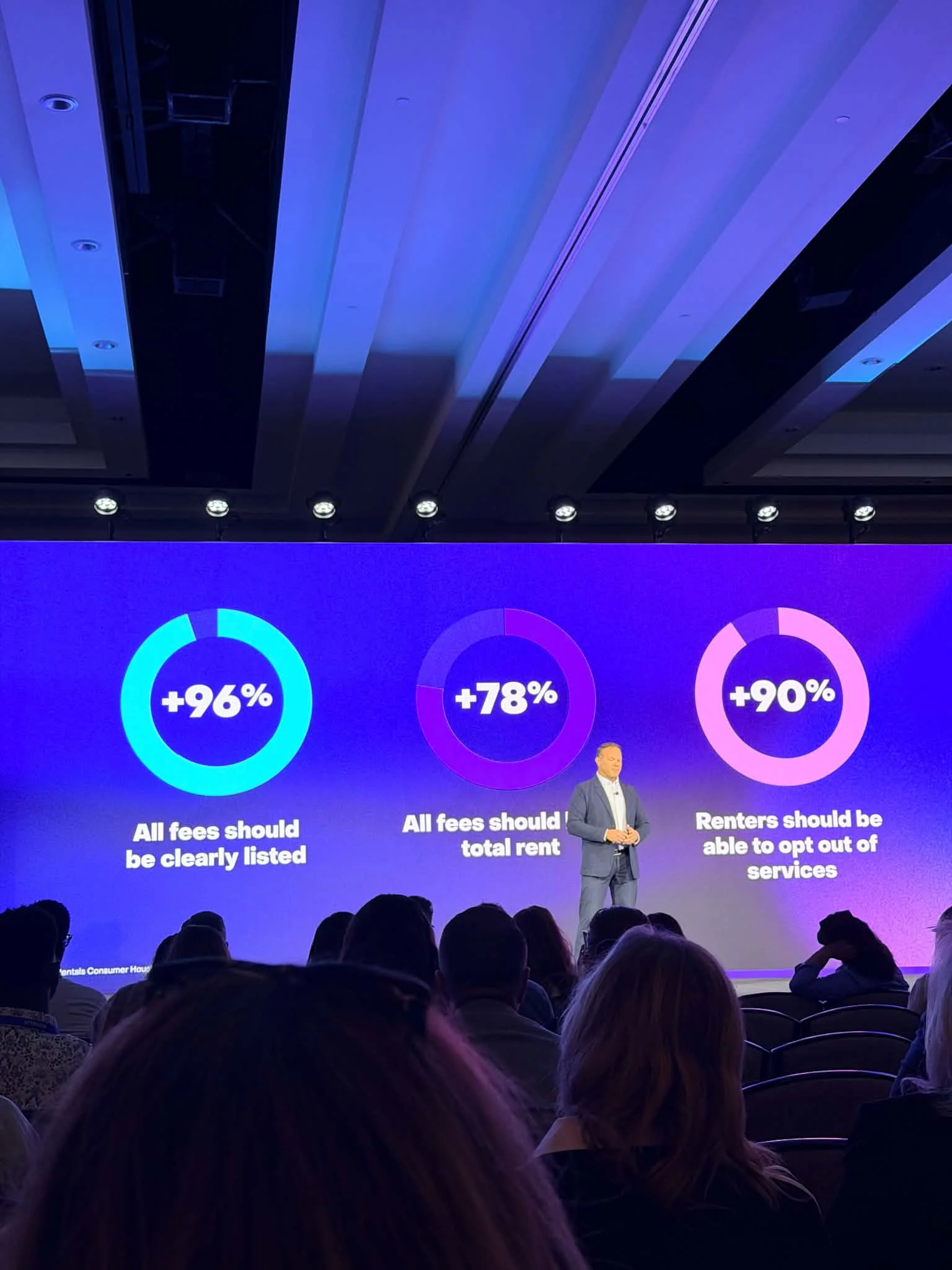
- 96% of renters want every fee listed up front.
- 78% want fees built into the monthly rent.
- 90% want the option to opt out of certain fees.
One panel noted that quoted lease totals often land $250 to $300 above the advertised rent once fees get added. Bozzuto shared that showing the total monthly price, instead of base rent plus add-ons, cut late-stage applicant dropouts by 38%. Greystar reported higher NOI doing the same thing.
If an applicant first learns about a fee at lease signing, you've lost some trust, and maybe the applicant. Pull up one of your live listings and compare the advertised rent to what a new resident pays in month one. If the gap surprises you, it surprises them too.
Renters are searching by talking to AI
78% of recent renters use AI at least occasionally, 55% use it weekly, and 25% use it to plan how they'll negotiate their rent.
In a Zillow pilot, renters using its conversational AI search scheduled tours at 3x the normal rate and applied at 2x. Renters have stopped typing "3 bed in Gilbert." They ask for a home office that isn't a bedroom, or a yard fully fenced for the dog. Your listing descriptions need to answer those questions.
Zillow plans to aggregate what renters ask across millions of monthly conversations and share those insights with operators. That's helpful. It also means Zillow sees the renter's real questions before the lead ever reaches us.
The macro picture for 2027
Zillow's chief economist opened Day 2 with an economy holding steady but straining: unemployment at 4.2%, the slowest hiring in 14 years, inflation at 3.7% and outpacing income growth, and consumer sentiment at 52 (the historical norm sits around 90).
Zillow's 2027 projections:
- Single-family rent growth of 3%+
- New completions down 6% nationally, with big swings by market: down about 30% in Phoenix, up about 10% in Dallas
- Concessions on about two-thirds of listings in Denver, Dallas and Phoenix, versus under 25% in coastal markets like San Francisco, Chicago and New York
The soft markets showed signs of life too. Rental engagement per listing in Phoenix is up 43% year over year, versus about 20% nationally.
So what does Zillow want? Your ad budget.
This was Zillow's first-ever conference track built for single-family operators, and the centerpiece was Zillow Listing Spotlight: paid placement that puts rental listings at the top of search results. It launched about a year ago at AppFolio Future '25. You buy a set number of monthly placements and assign them to your slow movers. When a home leases, the Spotlight moves to the next vacancy. A newer "Smart Assign" feature, rolled out in the last month or so, rotates placements automatically based on days on market or rent.
Zillow's pitch numbers:
- 3.25x the exposure and 2.4x the leads of free listings
- Homes vacant 30+ days filled 9 days faster than comparable listings
- At roughly $75 a day in vacancy cost on a $2,300 average rent, that's about $700 per home
After the main presentation, attendees broke into table discussions with Zillow staff, and one of my sources recorded hers. An operator compared Spotlight to a sponsored result on Google, and the Zillow staffer at the table said no: Spotlight listings aren't labeled as sponsored, and that's by design. Zillow wants the listing to look organic at the top of search. Spotlight doesn't change a home's days on market, but to a renter scrolling Zillow, a home that's been sitting for months can look fresh.
The price? According to my sources, it varies by market and portfolio size, just like their Feed Connect product, which most of you are paying for (not me).
So Zillow spent half a day nagging us about fee transparency, and then failed to practice what it preaches. Zillow's fees are unpublished, and the promoted listing is disguised from renters. If 96% of renters want every fee listed up front, I'd guess a similar share of property managers want the same from their listing platform.
One thing I liked
Zillow says a self-service API key for pulling Zillow lead-to-lease analytics into your property management software is on the way. Once it launches, I'll add it to my API Report Card.
I also got my hands on both of Zillow's new reports, the 2027 Consumer Housing Trends Report and The New Language of Leasing. Subscribers can download both from the newsletter issue linked below.
Adapted from Issue #214 of my newsletter. Subscribe here to get it twice a week.