Yes, this is going to be an article about light bulbs, written by an engineer-turned-property-manager. Sorry.
Having messed around with lighting, switches, and light bulbs for my entire adult life across not only my homes but the hundreds of properties we manage, here are some useful findings in no particular order.
1. Color temperature is REALLY important
Color temperature is what makes spaces in your home feel “right.” It’s measured in Kelvin. Not only do you want the correct color temp in various parts of your home, but all bulbs in a space should be the exact same color temperature as well.
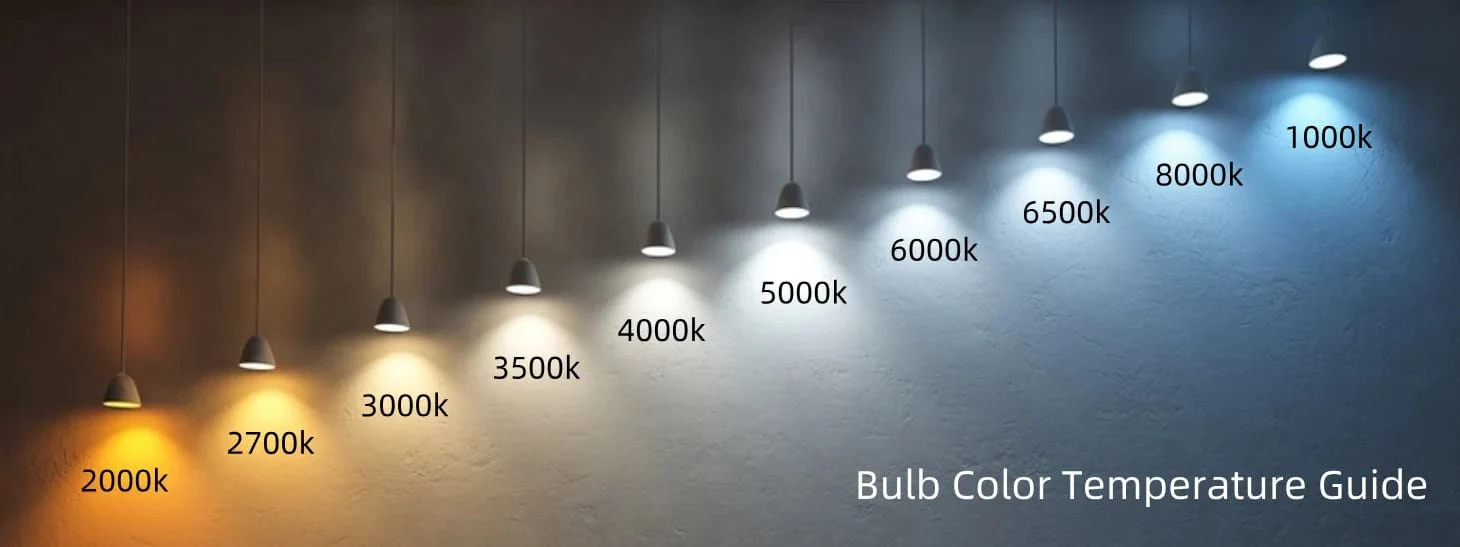
You don’t want your bedroom looking like a gas station at 2am. Here’s a quick guide:
- 2700k: bedrooms, living rooms, reading areas
- 3000k: common areas, kitchens, bathrooms
- 5000k: utility areas, workshops, garages
- No other bulb temperatures are needed except for specialty applications.
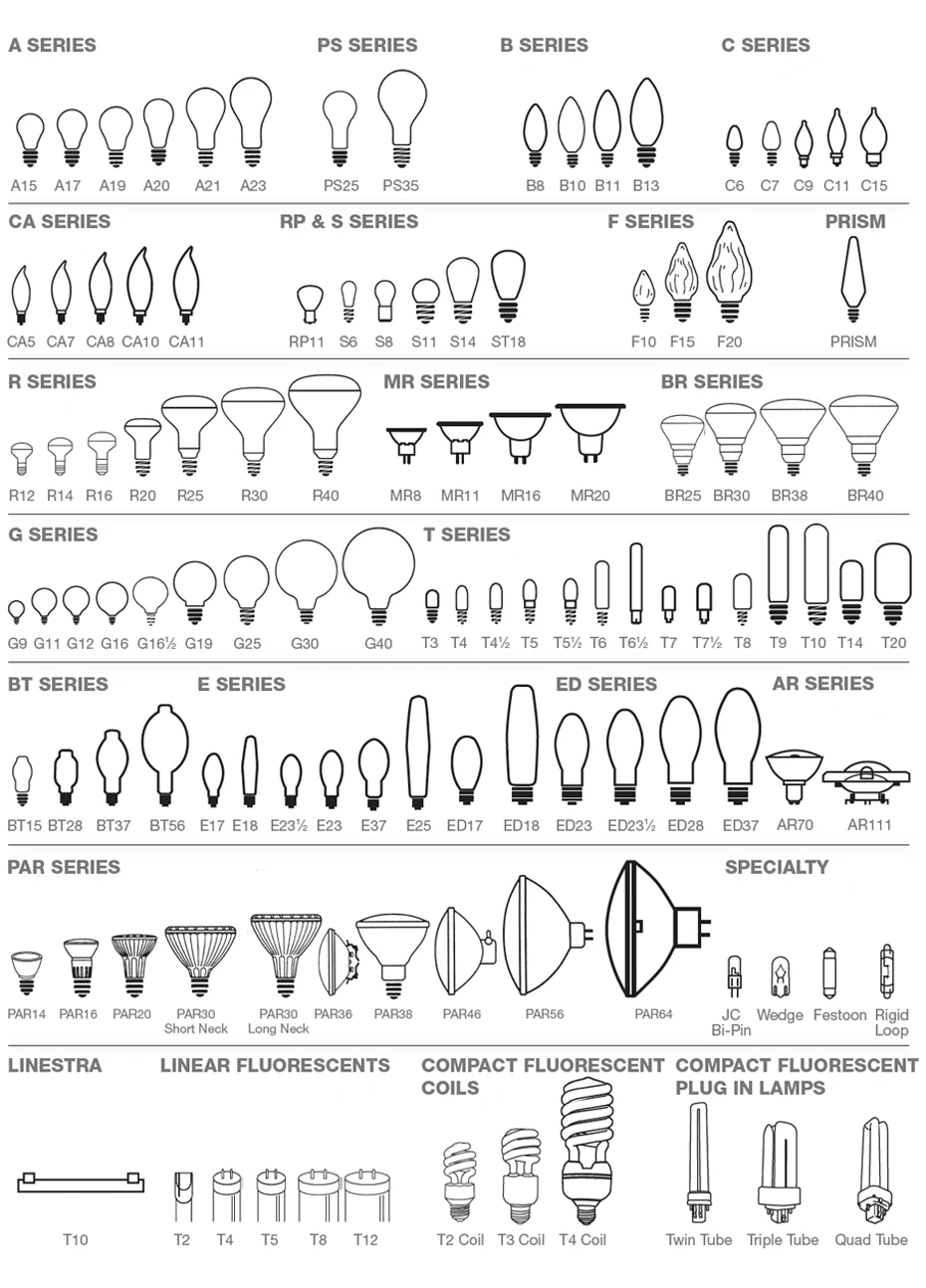
2. Light bulbs come in many different shapes and sizes
Shape and size are independent of color temperature or lighting technology such as LED. Below is a guide. What you think of as a “normal” light bulb is an A19, and a chandelier bulb (small base) is an E12. Save this image.
3. LEDs don’t last as long as they should
People complain that LEDs don’t last as long as they should. It’s true. Let me give you three suggestions on how to improve bulb longevity:
- Stick to name brands. There are a million weird light bulb companies on Amazon, and in my experience, they are horrible. Their labeled color temperature and brightness vary wildly from spec, and they don’t last. I always buy Philips if the bulb I want is available from them. Sylvania and Great Eagle are decent. I’ve had bad luck with GE and Feit.
- Avoid dimmable bulbs unless you truly need the dimming function. The added circuit complexity decreases reliability. Conversely, definitely get a dimmable bulb for use in a dimmable fixture.
- Enclosed fixtures kill LEDs (picture the classic “boob light”). That’s an enclosed fixture, meaning the bulb is not exposed to the ambient air but is sealed in. Heat is what actually kills LED bulbs (it slowly fries the circuits). For enclosed fixtures, consider a halogen bulb, an LED rated for use in an enclosed fixture, or a motion sensor. A bulb that is only on for 5 minutes won’t build up enough heat to shorten its life (more on motion sensors below).
4. Consider adding motion sensor light switches
Put them on the “edges” of your home’s living spaces. Specifically: closets, utility rooms, and basement areas. I use these ones from Lutron (2-pack). These rarely used parts of your home are super convenient to have on motion sensors because you’re often entering or exiting them with your hands full.
5. Messing with light switches or wiring connections? Grab a pack of Lever Nuts
Lever Nuts are the modern replacement for wire nuts. These things are AWESOME and make electrical work actually fun. I bought this 35pc pack from Wago years ago and never looked back.
6. Put all your outdoor lights on Lutron Caseta timers
These are the Rolls-Royce of home automation smart light switches. 100% bulletproof even during an internet outage. Power outages do not disrupt their schedule either. When I wrote this in November 2026, their starter kit looked to be on a Black Friday sale at 20% off.
Once you’re into the Caseta ecosystem you can add all kinds of fun stuff like automatic blinds, holiday light timers for outside, etc. My favorite is the lamp switch with built-in dimmer. Get all the lamps in your house on these and have them turn on automatically at sunset and off at 11pm or whatever. I have 3 of them.
OK, I’m sure that’s more than you’ve ever wanted to know about this topic, but hopefully some of it was helpful. Go crazy on Amazon and get your house looking and feeling spectacular for the holidays!
Adapted from Issue #218 of my newsletter. I write it twice a week for property managers, no fluff (and usually no light bulbs). Subscribe here.