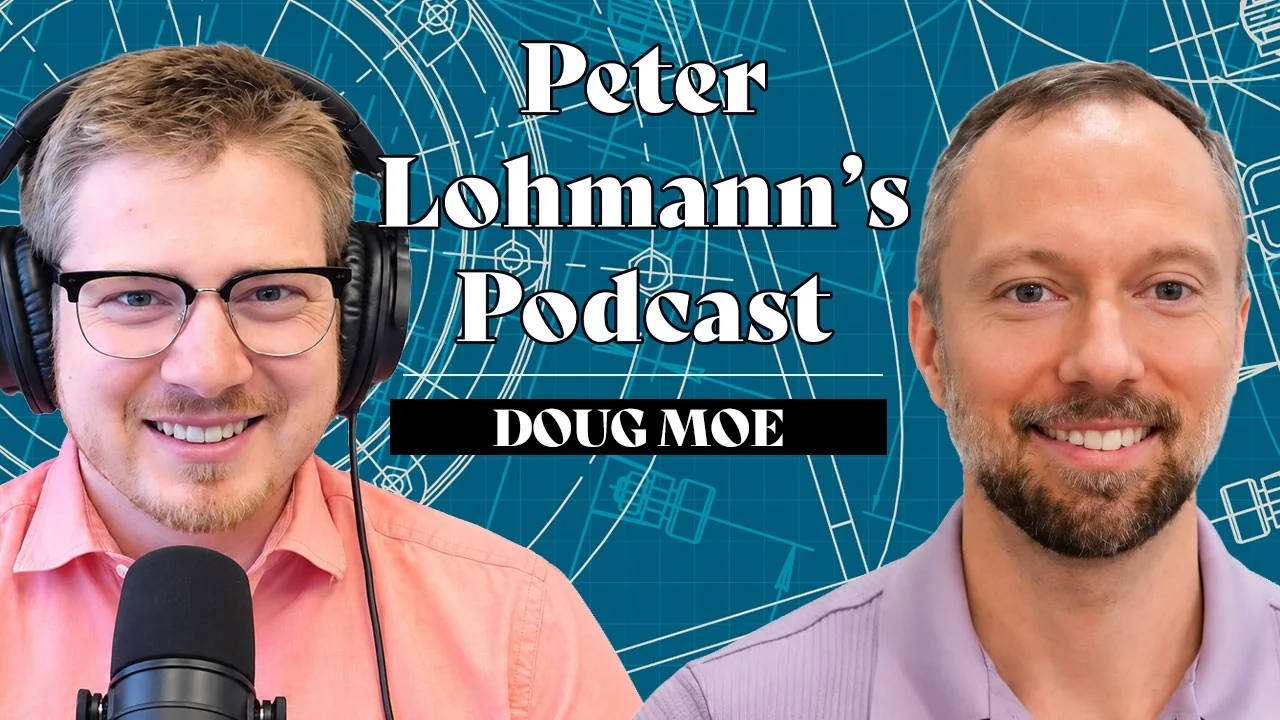
I don't spend much time thinking about property management companies that grow fast by outspending everyone else on marketing. I spend a lot more time thinking about the ones that grow fast without it. Doug Moe, owner of Touchstone Property Management in Portland, took his company from zero to 700+ doors in two years: no BDM, and by his account, without spending a dollar on advertising. I wanted to know how.
The Real Screening Happens Before the PMA Is Signed
Most property managers I know do their vetting during the sales conversation, then hope the relationship holds up once the owner is signed and the honeymoon period ends. Doug does something different: before he'll send a DocuSign, he runs a 90-minute to 2.5-hour onboarding call, walking the owner through everything from security deposits to how rent pricing decisions get made.
Doug told me the real value is the hour and a half of relationship-building he gets on the front end, long before the first conversation with an owner would otherwise be about a problem or a bill they owe. He's also using the call to screen for fit against three things: is the owner emotionally stable, financially stable, and willing to trust his process. One owner mentioned, almost in passing, that he'd sued two of his last four property management companies. Doug ended the conversation there.
He estimates he's walked away from 50 to 100 doors' worth of business this way. Most operators would count that as a marketing failure. Doug counts it as the whole point.
Growth Without a BDM (Or a Marketing Budget)
Here's the part that surprised me most: Doug hasn't spent a dollar on advertising, and he doesn't have a business development manager. He runs every sales conversation himself. When I asked how he's actually generating 700 doors of demand, he broke it down roughly into thirds: about a third of new business comes from existing clients referring him, a third comes from his website (a simple one-page scroller, nothing fancy), and the rest comes from referral relationships: realtors, loan officers, and a local BNI networking group.
He was blunt about what that actually costs him. It's not free: he's just paying in founder time instead of ad dollars, and founder time, as he put it, is arguably the more expensive currency. The tradeoff is real: at 700 doors, he's still the one taking every sales call and running every onboarding conversation, and he knows it. He'd consider a BDM eventually, but he's not convinced sales is his actual bottleneck yet.
A Waiting List Cost Him More Than It Won Him
I asked Doug about this because I've run this experiment myself. Years ago, RL had a waiting list for about 90 days, and I still run into people today who remember it and wanted back in. Scarcity seemed to make people want it more.
Doug's experience ran the other way. His onboarding queue currently sits at about a month (it's ranged from two or three days up to two months, depending on team capacity), and by his own estimate, he's lost more prospective clients to that wait than he's gained from any perceived exclusivity. Most people, he said, just want to know why it's taking so long.
Doug credits his low churn to the onboarding call, and to consistently doing what he says he's going to do. The numbers back it up: 28 doors lost company-wide last year, 11 so far this year, against a base in the several hundreds. That's a churn rate most PM companies would take in a heartbeat.
The Tech Stack Is Simpler Than You'd Expect
For a company scaling this fast, Doug's stack is almost stubbornly low-tech in places. He runs AppFolio and Property Meld, but for onboarding checklists and SOPs, his team still works out of shared Google Sheets: a new row per property, checked off task by task. He actually tried a dedicated process-automation platform, hired a consultant to build it out, and killed it 30 days in because the click-to-load lag on every step was slowing his team down more than the automation was speeding them up.
Showings follow the same logic. Doug's team has done 100% remote showings with plain four-digit lockboxes for a decade: no self-showing software, no smart locks. His team fields roughly 450 leasing inquiries a month, manually, during business hours only. He knows he's leaving some after-hours leads on the table. He's decided that's an acceptable cost for a system his team can run without babysitting a vendor integration.
Where He's Actually Using AI
The one place Doug's stack gets genuinely modern is the back office. His team runs a shared Claude workspace, building out job descriptions, team scorecards, training docs, and (on the commercial side) CAM reconciliation work and portfolio analysis for prospective owners. AppFolio's limited API access means he can't wire AI directly into his PM software yet, so for now it lives alongside his systems rather than inside them.
It's a good reminder that using AI in property management doesn't have to mean a leasing chatbot or an automated maintenance coordinator. Sometimes it's just a faster way to keep your internal documentation from turning into another Dropbox folder nobody opens.
The Takeaway
Doug's model won't work for every PM company: turning away business on purpose only makes sense if you actually have more demand than capacity, and the referral engine behind it took him years (and a decade of industry relationships) to build. But the underlying lesson travels: the biggest lever in his business is a conversation he has before he ever signs a client.
Watch the full conversation with Doug: