“What are your fees?”
That was the very first question a prospective owner asked Krishna Upadhyaya, broker/owner at Eclipse Property Management, after a quick round of introductions. Krishna was driving at the time, so he took the call over Bluetooth, gave a short pitch, and ran through his fees. The next day the owner messaged him to say he’d decided to self-manage.
Krishna wrote about that call in a guest article for my newsletter’s Tuesday Edition, and I wanted to give it a longer treatment here. I’d bet most PM owners have taken some version of that call. The fix Krishna lays out is a simple property management discovery call process, and it’s worth stealing.
Property Management Is a People Job
Krishna titled his piece “They Should Have Called it People Management,” and the point holds up. The word “property” is right there in the job title, but most of the actual work is with people: prospects, tenants, owner clients, realtors, vendors, affiliates, and other property managers.
Of all those relationships, the manager-client relationship is the one that matters most to the business. And in Krishna’s words, “Trust is the foundation of all relationships and it must be built from the beginning.”
That starts with the very first phone call.
The Fee Question Is Where Leads Quietly Die
What I appreciate about Krishna’s story is how honest he is about what went wrong. The owner led with price, seemed uninterested in anything else, and Krishna let that set the tone. As he put it: “I didn’t have my heart in it and I should’ve known better.”
Put yourself in the owner’s seat. This was someone with a house he couldn’t sell, now looking at becoming a landlord. He knew nothing about Krishna’s company. When you know nothing about a service, price is the only thing you can compare, so of course it’s the first question.
If you answer only the question asked, you’ve agreed to compete on price alone. And look at who won in Krishna’s story: the owner decided to do it himself. For a lot of small owners, self-management is the main alternative to hiring you, and a rushed five-minute call makes no case against it.
Krishna’s conclusion was that he should have slowed down: get the owner into a real meeting, give him undivided attention, walk him through onboarding, and let him see why he could trust Krishna with his property.
Krishna’s Discovery Call Process, Step by Step
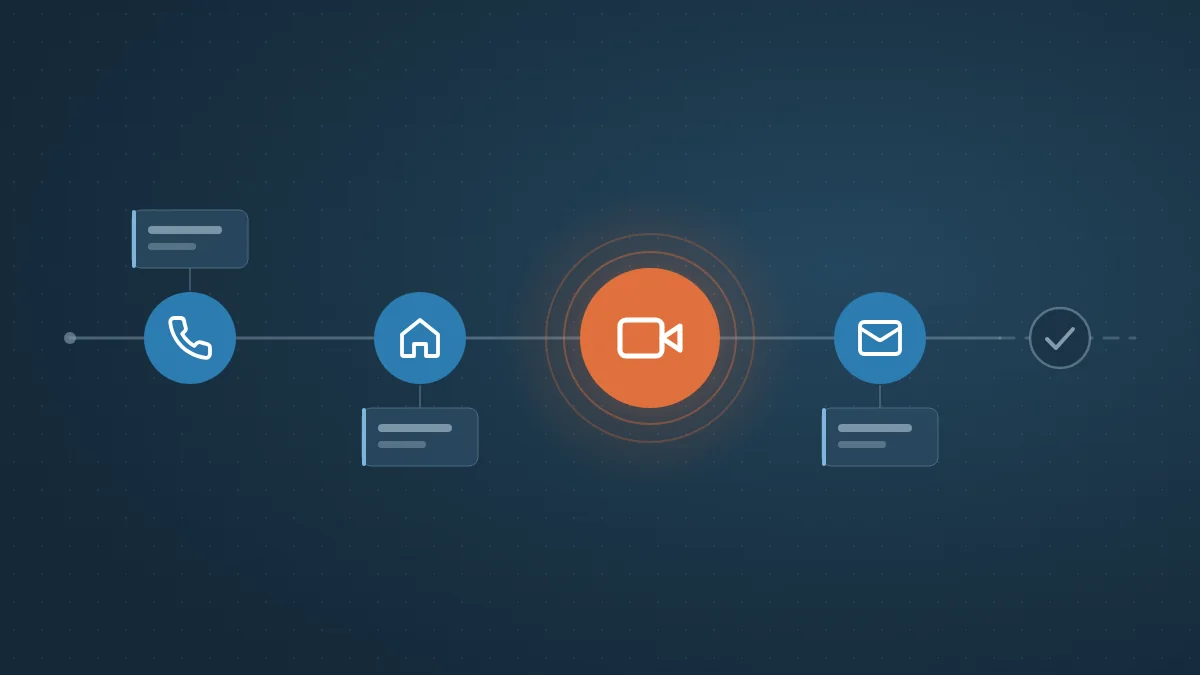
Here’s the checklist Krishna shared, grouped into the four moments where it happens.
- 1First callBrief intros, get the address and email, book the meeting
- 2PrepResearch the property and send the meeting link
- 3Discovery callAbout 30 minutes on video, with fees at the end
- 4Follow-upA summary email within hours, then a call a day or two later
On the first call
- Pick up the phone.
- Keep the introductions brief, and get the property address and the owner’s email.
- Book an introduction call (Krishna calls it a Discovery Call) for about 30 minutes over Zoom, Teams, or Google Meet.
The first call has one job: get the second meeting on the calendar.
Before the discovery call
- Research the property ahead of time.
- Send a follow-up email with any marketing information you have, plus the meeting link.
During the discovery call
- Walk through your business, experience, and expertise.
- Share what you learned about their property: rental comps, the local market, and so on.
- Ask if you can follow up in a day or two to see what they decided.
- Disclose your fees at the end.
After the call
- Within a couple of hours, send an email summarizing the conversation.
- A day or two later, call to see if they’re ready to move forward.
None of this is complicated, which is kind of the point. Most of us know we should do something like it, and most of us skip it when we’re busy, driving, or annoyed that the first question was about price.
Why the Fees Go Last
The step that will make some operators uncomfortable is saving fees for the end of the discovery call.
Krishna isn’t hiding anything. The fees still get disclosed on the call, in full, before the owner decides. What changes is the context around the number. By the end of a good discovery call, the owner has seen rental comps for their own property, heard how you’d run it, and gotten a feel for whether you know what you’re doing. A management fee lands differently once it’s attached to all of that than it does as the opening line of a cold call.
There’s a real tension here, though. Some callers won’t give you 30 minutes until they hear a number. I’m curious how other operators handle that person: do you give a ballpark on the spot and then push for the meeting, or hold the line? Let me know.
What This Costs You
This process isn’t free. Between the research, the follow-up email, the 30-minute call, the summary, and the follow-up call, you’re probably looking at close to an hour on a lead who may never sign.
Krishna’s argument is that the investment itself is the message. When he’s put that much time into the research and the call, he wrote, “the prospect will know I am serious and committed to be their manager.”
Whether it’s worth it comes down to a number every PM owner should know: what one new owner client is worth to your company over the life of the relationship. Compare that to an hour of your time (or a team member’s) and the math gets easy fast.
A few ways to keep the hour from growing:
- Make the property research a fixed checklist so it doesn’t turn into an afternoon.
- Template the pre-call email and the post-call summary, and fill in the specifics.
- Put the follow-up call on the calendar before the discovery call ends, so it happens.
Pick Up the Phone, Then Slow Down
Krishna’s first step is “pick up the phone,” and he’s right to start there. But his story shows that answering isn’t enough. The first call is where the manager-client relationship starts, and treating it like a quick price quote can cost you the client before you ever get a chance to earn their trust.
Thanks to Krishna for writing this one. If you want more operator-written lessons like this (plus my own takes twice a week), you can subscribe to my newsletter at peter.beehiiv.com.