Todd Ortscheid recently published a piece called "Vendor Rebates Aren't Kickbacks."
I think he's wrong, and I think he's wrong in a way that a lot of intelligent, well-intentioned operators are also wrong - which is exactly why it's worth walking through carefully.
Let’s start with an example that I like to call the “plumber test.” Say you run a local plumbing outfit, and for six months you've done solid work for a property management company. Then the PM's owner calls and tells you the only way to keep getting sent jobs is if you start cutting her a check. Nobody needs a law degree to know what that is. It's the textbook fiduciary violation, just dressed up as a business arrangement.
That's the same transaction we're debating here - better branded, same substance. My position: a vendor rebate is a kickback, however it's labeled, which is why we don't accept them at RL Property Management. Rename it. Disclose it. Doesn't matter. If a vendor is cutting you a check because of the work you route to them on your owners' behalf, that money belongs to your owners, not you.
What Started This
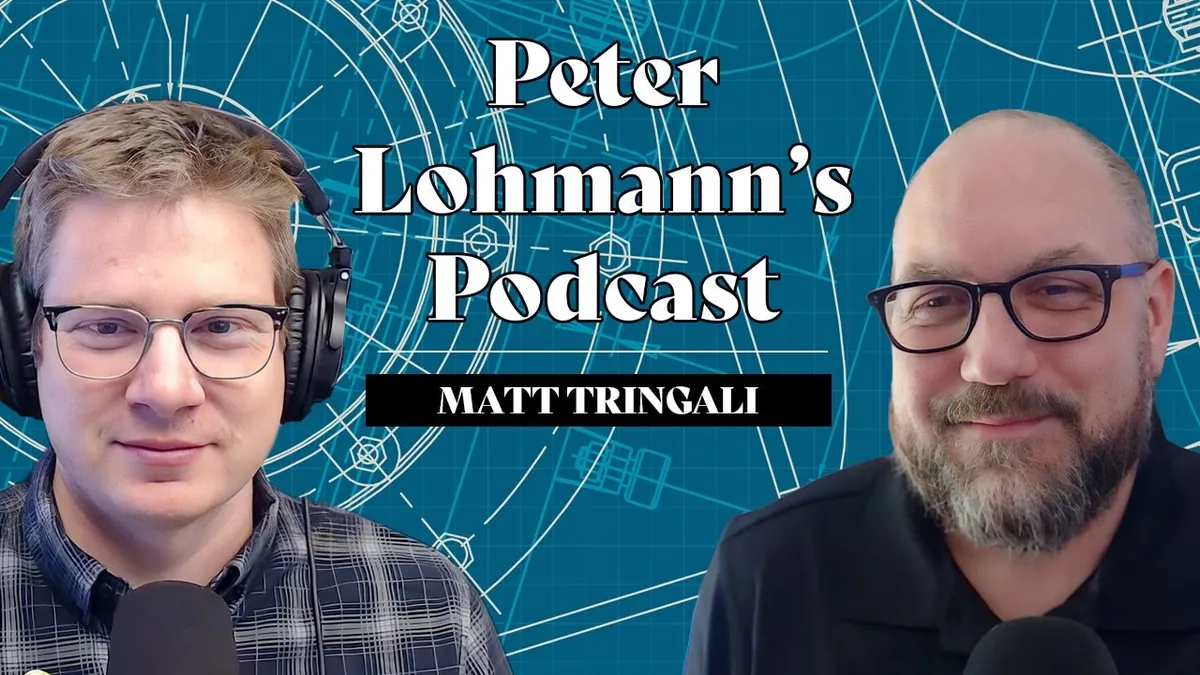
Here's where the debate actually began. I had Matthew Tringali on my podcast recently. He used to run a PM company and now runs BetterWho. We got into a discussion about how he monetizes maintenance by breaking it into three parts: a maintenance coordination fee, a project management fee, and what he calls a "vendor marketing fee." The first two go straight to the owner's bill. Here’s the conversation from my podcast - starting at 36:05:
Matthew's version: he approaches vendors he sends a lot of business to and offers them a "preferred vendor" listing on his website. In exchange, they pay him a monthly fee that (in his words) "can be reflective of that volume of work," priced off "what we did together last year." At his old company's 750-door size, he estimated that could mean "an extra $10,000, $20,000 a month or more."
I asked whether he discloses this to owners. His attorney told him he doesn't have to, because it's technically a separate transaction from the work orders themselves.
I pushed back right away, calling it "a straight-up kickback... not allowed in a fiduciary agreement." My argument was (and still is) that money is "leveraging the work that's flowing through you to enrich yourself," and if a vendor can afford to pay it out, "clearly you could get the work done for that price" without the markup.
Then Todd Weighed In
That exchange between Matt and me is what prompted Todd's rebuttal. And I want to be clear - I respect Todd because, especially in our industry, iron sharpens iron, and he usually is sharp. But not this time.
His argument rests on RESPA (the Real Estate Settlement Procedures Act), which he correctly notes doesn't apply to property management. No RESPA, no law. So in his view, the only real requirement left is disclosure. Disclose the rebate, and everything is fine.
Three problems with that:
Problem 1: A New Name Doesn't Change What the Payment Is
Matthew calls his arrangement a “marketing fee” for a website listing. But by his own account, the size of the check tracks the volume of work he sends the vendor. That's not a marketing fee. A payment that scales with the business you route to someone is a referral payment, whatever it's labeled on the invoice, and whether it's billed alongside the work order or on a separate one entirely.
The CFPB's own kickback rule under RESPA, 12 CFR § 1024.14, spells out exactly this test: a recurring payment "connected in any way with the volume or value of the business referred" is treated as evidence of an illegal referral arrangement - no formal contract required, regardless of what it's called. The Restatement of Agency arrives at the same place from a different angle: an agent can't pocket a benefit from a third party tied to work done for a principal, unless the principal knowingly consents (more on that later). Two different bodies of law, same conclusion. The label on the invoice is irrelevant. What matters is where the money originated. Calling it a website listing fee doesn't change that it only exists because of your owners' maintenance spend.
On the steering question: Todd says he's never actually seen a PM pick a worse vendor to collect a rebate, and honestly, neither have I. Nobody's running the cartoon version. But that's exactly what a well-managed conflict of interest looks like: invisible. Nobody consciously hires the bad guy. What happens instead is smaller and harder to catch. Two vendors are close enough on quality, and you lean toward the one paying you. A price ticks up over time, and you push back on it a little less than you would have, because part of that number is quietly flowing back to you.
Problem 2: Disclosure Doesn't Change Whose Money It Is
Telling an owner "I'm keeping a slice of your maintenance spend" is more honest than hiding it. It does not make that slice yours. If a vendor can afford to hand you $3k a month and stay profitable, that $3k was already priced into what your owners paid for the work. It was theirs before you ever disclosed anything. Disclosure tells them what's happening. It doesn't transfer ownership of the money.
Todd himself agrees that hidden compensation is a kickback by definition. Fine, but Matthew's program isn't disclosed. His own attorney told him he didn't need to disclose it. The specific arrangement that started this whole debate fails Todd's own baseline test.
This pattern isn't unique to property management, either. The SEC ran its Share Class Selection Disclosure Initiative for exactly this reason: investment advisers were collecting 12b-1 fees and revenue-sharing payments from mutual funds, disclosed in the fine print of a Form ADV, while steering client money into the pricier share class. Roughly a hundred firms self-reported and still had to return the money. The disclosure was real. It didn't make the fee theirs to keep.
Problem 3: "RESPA Doesn't Cover Us" Isn't the Win Todd Thinks It Is
Todd's correct that RESPA doesn't govern property management. But look at why RESPA exists before treating that as permission. Congress passed it in 1974 to eliminate "kickbacks or referral fees that tend to increase unnecessarily the costs of settlement services.” This is the exact dynamic we're talking about, where a vendor pays for steered business, and the client eats the cost without ever seeing it.
And notice what Congress actually did about it. Not "disclose it." They banned it outright, with civil and criminal penalties written into Section 8 of the Act. Under RESPA, a referral itself isn't a billable service. You can only get paid for work you actually performed, at a fair price. That's the federal government's considered judgment on referral money in real estate, sitting one industry over from ours.
So yes, property management sits in the one corner RESPA never reached. Statutory gaps like this have a way of closing once enough operators abuse them, and I'd rather hold myself to that standard voluntarily than wait for someone to write it into law for me.
Doctors, Financial Advisors, and Why the Comparison Backfires
Todd's strongest move is pointing to doctors and financial advisors - both fiduciaries who routinely take money from third parties. If it's fine for them, why not us?
Fair question, wrong conclusion. Those two relationships are the most heavily policed fiduciary relationships in the country, and looking closely at how they're policed undercuts Todd's point rather than supporting it.
Financial advisor 12b-1 fees and revenue sharing produced the SEC crackdown described above, plus an entire fee-only advisory movement built around refusing third-party money altogether. And prescribing based on payment from a drug company is a federal crime under the Anti-Kickback Statute. The bar there is genuinely strict: courts apply what's called a "one purpose" test, meaning a payment is illegal if inducing the referral is even one motive behind it, even when the payment also covers something legitimate like an actual speaking engagement. A fee explicitly priced to be "reflective of volume" comes close to failing that test on its face. Legitimate speaking and consulting fees for doctors have to be for real work at fair value, unconnected to prescribing totals, and even those get logged publicly in Open Payments, a federal database that exists precisely because disclosure on its own wasn't judged sufficient. Todd cites that database as proof that disclosure works. It actually exists because disclosure, by itself, wasn't enough.
What NARPM's Code of Ethics Actually Requires
Todd leans on one more claim: that disclosed rebates line up with NARPM's Code of Ethics. Since NARPM is the closest thing our industry has to a shared ethical standard, I went and read the actual text.
Article 8 of the NARPM Code of Ethics, "Duty to the Firm," requires a property manager to disclose any compensation, rebates, or benefits they receive - but only to their own firm or broker. Not to the owner.
You could collect vendor rebates, tell your broker, tell no one else, and still be in full compliance with NARPM's actual text. That's not the standard "disclosed rebates are ethical" requires. It's a narrower rule that happens to share the word "disclosure."
"I Deserve to Be Paid for the Value I Bring"
You might. Sourcing and managing a solid vendor network is real work, and Todd and Matthew are both right that owners benefit from it. If you deserve payment for that work, there's a straightforward, honest way to collect it: write it into the management agreement, name the fee, and let the owner agree to pay it. We do this at RL with a markup on third-party invoices - charged openly, to the person we work for, for a service we actually provide them.
That's also (not coincidentally) the exact exception the Restatement of Agency builds in. An agent generally can't keep a benefit from a third party tied to the principal's business unless the principal gives informed consent to that specific arrangement. That's the real hinge point: informed consent to a specific, stated deal. An owner signing off on a written markup in the PMA is consent. A vendor quietly cutting a check based on last year's invoice volume is not, no matter how many attorneys signed off on the structure.
What isn't available to you is deciding on your own that you deserve a raise, then collecting it from a vendor out of money your owner is generating, without ever asking your owner. RESPA's answer here is direct: a referral, by itself, isn't a service you get to bill for.
The Only Question Worth Asking
Skip the label. Skip whether it's one invoice or two. Skip whether some attorney blessed it (finding one lawyer willing to sign off on something doesn't make it legal, and it definitely doesn't make it ethical). Ask this instead: would the arrangement survive an owner who fully understood it and had every reason to object?
Here's a test: have a PM defending this model publish a one-page list every month (every vendor who paid them, and how much) and send it to every owner they manage for.
Owner: "I see you hired ABC Plumbing again. Nothing to do with the $3k they paid you last month?"
PM: "Total coincidence. They just happen to be the best vendor for your property too."
Bottom Line
I like both Matthew and Todd, and they're doing what plenty of smart, good-faith operators in this industry do. That's exactly what worries me about it. We've convinced ourselves that a disclosure line and a well-worded invoice turn our owners' money into our money. They don't. Property management's reputation already sits somewhere next to the “used car salesman's,” and “that didn't happen by accident.” It happened one "fully legal, fully disclosed" hand in the cookie jar at a time.
Charge your owners fairly. Charge them in the open. And stop cashing checks from the other side of the table.
Further reading:
Todd Ortscheid, "Vendor Rebates Aren't Kickbacks" — the piece this responds to
12 CFR § 1024.14 — CFPB's kickback and unearned fee rule under RESPA Section 8
HHS OIG: Fraud & Abuse Laws — overview of the federal Anti-Kickback Statute
CMS Open Payments — the public database of industry payments to physicians
SEC Share Class Selection Disclosure Initiative — the enforcement action referenced above
Not legal advice, and I'm not a lawyer. This is a layperson's read. Talk to an attorney who knows property management law in your state.