I’ve been thinking a lot lately about the future of communication between property managers and rental owners.
Some of this thinking is coming from changes we’re making at my own company. But a lot of it is also coming from new survey data we’ve been working on for the 2026 PM Trends Report, in collaboration with Harris Poll and Jordan Muela (coming soon!)
I’ll save most of the details for the report itself.
But one early takeaway is already crystal clear:
Owner response-time expectations are getting intense!
If a property owner contacts their property management company and doesn’t hear back within about 30 minutes, satisfaction drops fast. And it keeps dropping the longer they wait.
That reality forces an uncomfortable question for property managers:
How exactly are we supposed to meet that expectation?
Because there are really only two viable ways to do it.
And they’re very different.
Option 1: Build (and run) a Call Center
One way to hit those response-time expectations is to structure your company like a call center.
That means:
Dedicated CSRs answering phones, emails, and tickets
Performance metrics around pickup rate, response time, and ticket closure
Routing systems and workflows
Clear escalation paths
I’ve seen this done extremely well at a very large property management company.
When it works, it really works.
Owners get quick responses. Issues get triaged fast. And nobody is waiting hours (or days) for an answer.
But here’s the catch: The entire company has to be built around this model.
Leadership has to be maniacal about response times. Every system has to support rapid intake and resolution. Staff roles have to be designed around availability and coverage.
In other words, it’s not just a customer service tweak. It’s an operating system.
And if you only half-implement it? Chaos. (Half-measures create chaos…ask me how I know.)
Option 2: Build Personal Relationships
There’s another path that works very differently.
Instead of building a call center, you build personal relationships between owners and a specific team member.
Let me give you a non-property-management example:
I bank with Chase. At Chase, I have a personal business banker. His name is A.J. He lives in my city, and whenever I need something related to my business accounts… I just call his cell phone.
Put differently: I call my banker, not my bank.
And by the way, before anyone assumes I’m some kind of VIP client… I’m not. Our accounts there are no bigger than most of yours reading this.
But here’s the interesting part: If A.J. doesn’t pick up the phone when I call?
I don’t panic. I don’t start Googling Chase customer service numbers. I definitely don’t leave angry Google reviews. I just assume he’s busy and will call me back soon. And he always does.
The key insight here is simple:
We tolerate slower response times from people we know.
We expect instant response times from faceless organizations.
What This Looks Like in Property Management
This same dynamic applies directly to property management:
If a rental owner calls your main office line and gets bounced around or sent to voicemail, they get frustrated quickly.
But if they’re calling their property manager (someone they know, trust, and interact with regularly), the psychology changes.
If that person doesn’t pick up immediately, the owner usually thinks:
“They must be tied up. They’ll call me back.”
No anger. No panic. No complaints. Just patience.
But for this to work, your company structure has to support it.
Specifically:
Each owner must have a clearly designated point of contact.
In most cases, that means organizing the company around:
Portfolio-style management, or
Pods / squads, where a small team supports a group of owners.
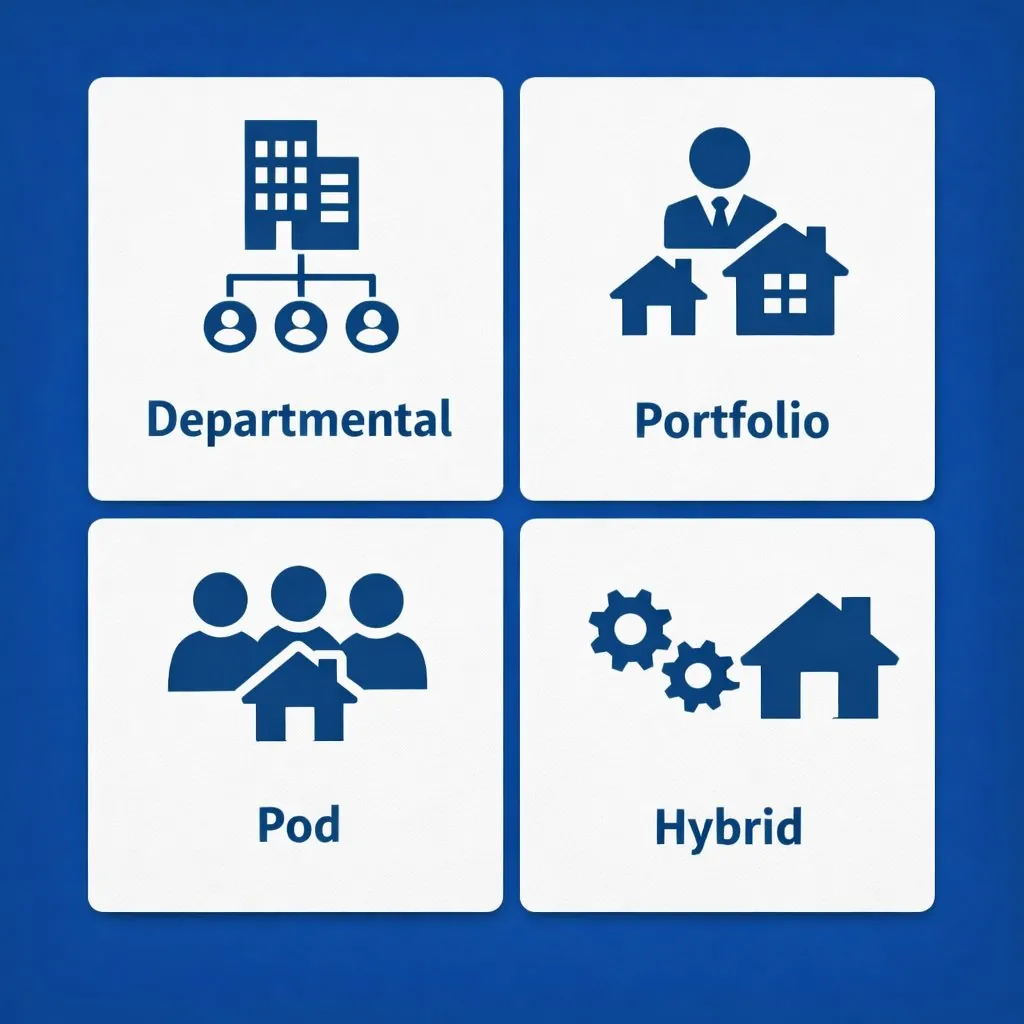
If you’re curious about the common structures PM companies use as they grow, I’ve written about them before in Three Ways to Organize a Property Management Company: portfolio, departmental, and pod models.
Each has tradeoffs, but only some support strong owner relationships.
The Model That Probably Won’t Work
Here’s the model I’m increasingly skeptical about: The middle ground.
That’s where a company:
Doesn’t have the speed and staffing of a call center
But also doesn’t assign specific owners to specific people
In this setup, owners call the office and think: “I can never get ahold of anyone at this company.”
Not fast enough to feel responsive. Not personal enough to feel relational. Just… frustrating.
From a systems perspective, this is the worst of both worlds.
Processes are like plumbing: invisible when they work, a disaster when they don’t. And the communication structure is a big part of that plumbing.
The Path We’re Taking
At RL Property Management, we’re currently moving more toward the relationship model.
Owners will interact primarily with a specific person on our team (aka - their dedicated Property Manager), rather than a generalized support queue.
It’s a shift in how we think about communication, accountability, and organization.
Will it work? I’m optimistic.
But I’ll report back once we’ve got real data.
Key Takeaway: You Need to Meet their Expectations… YESTERDAY
Owner expectations for responsiveness are rising fast. That trend isn’t going away.
And in my view, property management companies will increasingly be forced to choose between two clear models:
1. Build a call center: Lightning-fast response times through centralized support.
2. Build personal relationships: Owners call their property manager, not your company.
Both can work.
But hanging out in the middle probably won’t.
And if you’re running a PM company today, it might be worth asking yourself:
Which model are we actually building?