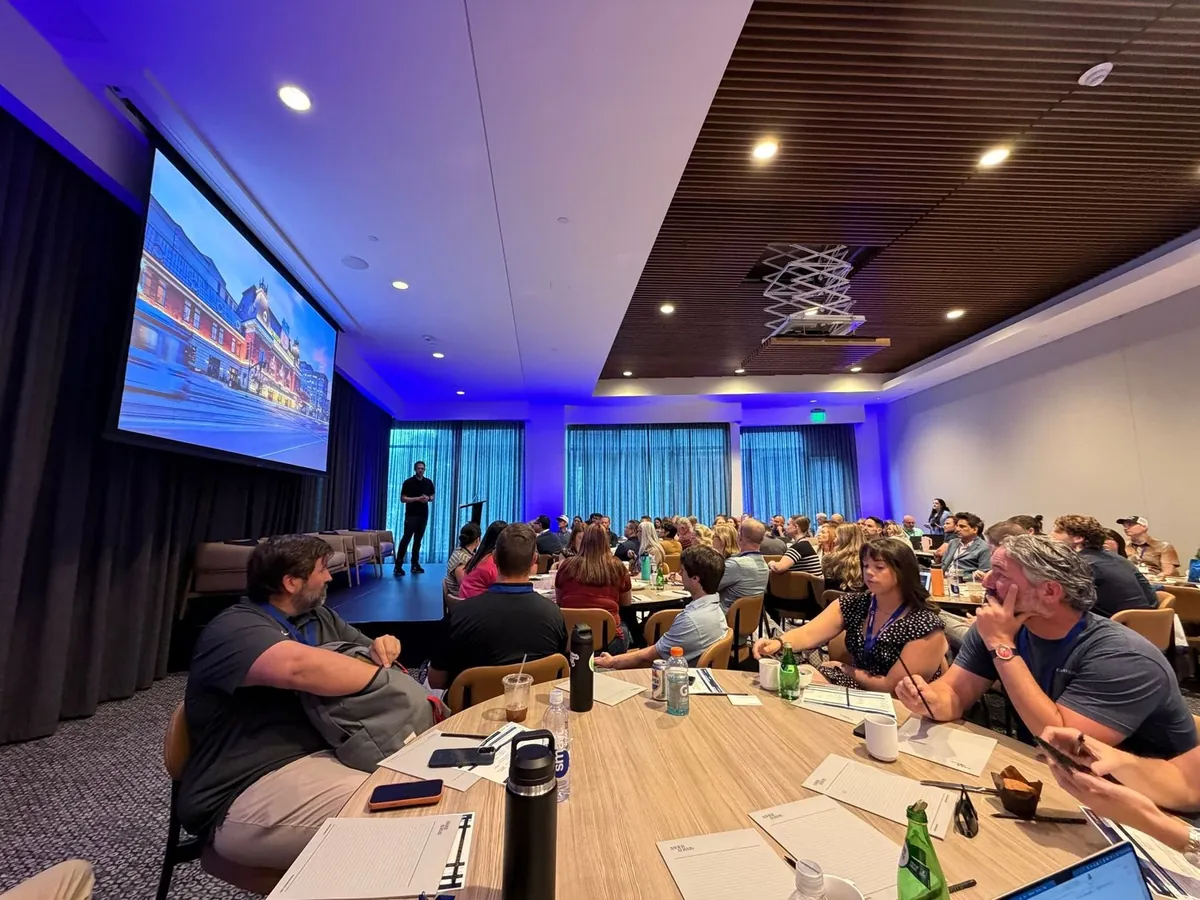
I'm writing this from Salt Lake City, where LeadSimple University 2026 just kicked off with CEO Chris Winn's opening keynote. Two days of hands-on training, deep-dive workshops, and real conversations with operators who are actually scaling. This is shaping up to be the strongest LSU yet.
But the keynote is what I want to dig into here, because there's a lot coming down the pipe from LeadSimple, and some of it is going to change how a lot of you run your businesses.
The Room
Before getting to product, a quick scene-setter, because I think the who matters when you're trying to figure out whether a software roadmap is actually built for you.
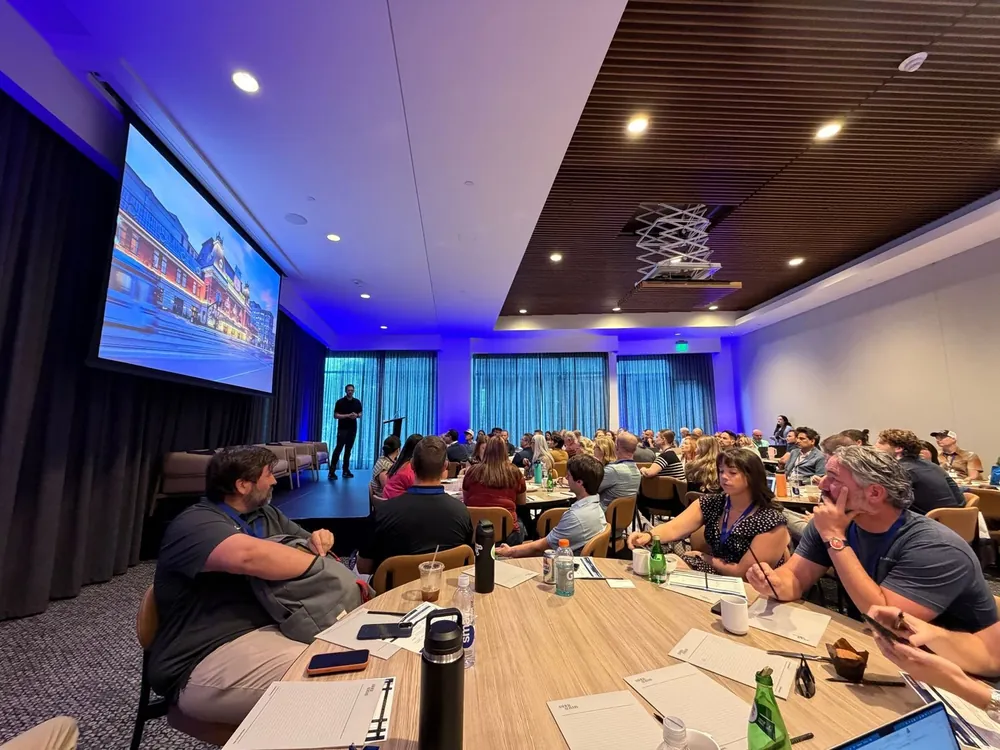
LeadSimple also brought their A-team. 16 team members and partners are here: marketing, sales, customer success, support, product, and engineering. They literally flew in software engineers so customers can sit down with the person who built the feature they're stuck on. Best attendee-to-team ratio they've ever had at LSU.
The Market Read
Chris opened with a market read before getting to product, and it set the table for everything that came after.
The short version: the market is less forgiving than it was a year ago. Vacancies have drifted back toward post-COVID stable. Rental demand is still durable (homeownership remains tough for most people), but every stakeholder is feeling pressure.
Owners are getting squeezed by rising insurance and repair costs.
Tenants are feeling the pinch too, which makes renewals more valuable than ever.
Property managers are scaling doors but watching operating expenses scale right along with them, which means revenue growth doesn't automatically translate to better margins.
The way out, Chris argued, is efficiency. Not "do more with less.” That's just code for burning out your team. Real efficiency means giving your team superpowers so the same people can do better work.
That framing matters because it's the lens through which to read the rest of the roadmap. Every product update Chris announced is either about killing the "bounce between tools" tax, or about making your existing team more productive.
Here's what's coming…
1. Workflow Designer
LeadSimple is rolling out a brand new way to build processes and pipelines this week.
The existing builder isn't going away. If you've spent years getting your processes dialed in, nothing changes for you. But sitting alongside it will be a chat-based workflow designer. You can talk to it in plain English ("build me a move-out process," or "add a step that sends the vendor an email when the work order is approved") and it'll draft the stages, conditional logic, email templates, SMS templates, any action you can do manually.
You can also point it at flows you've already built and ask for advice. Notice a kink in your renewals process? Talk to it. It'll suggest tweaks and let you accept or decline each change.
A few honest takes on this:
It's not going to replace working with a real consultant on a deep process buildout. The people who do this for a living (looking at you, Ben Serven with BlackSheep Global, Kelli Segretto with K. Segretto Consulting, etc.) bring strategy, not just configuration. But for the in-between cases (small tweaks, second drafts, "I know what I want but don't want to click through 40 settings to get there"), this is going to save a real amount of time.
It also lowers the barrier for owners who should be improving their processes but find the builder intimidating. If you've been putting off a workflow update because the thought of opening the process builder makes you want to nap, this is for you.
Rolling out soon.
2. Operations Pro (formerly the Maintenance Add-on)
The maintenance add-on is being renamed Operations Pro, and the product itself is getting a major upgrade. If you already have the maintenance add-on, you're getting all of this included for free.
The original maintenance add-on was a good start (two-way work order sync, a new work order process template), but the feedback Chris shared was that it didn't fully solve the problem. Operators were still bouncing between LeadSimple and a separate maintenance tool to actually run their work orders end-to-end.
This time, they're going for a complete product. Here's what's included:
An overhauled work order process: more flexible, faster, smarter. Two-way sync with your accounting software still intact.
Built-in vendor quote collection workflows: request quotes, collect them, compare them, all inside LeadSimple.
Cost tracking: out of the box, no spreadsheets required.
Tenant scheduling support: for coordinating access and appointments.
Better handling of photos and files attached to work orders.
A passwordless portal for tenants and vendors. They fill out a clean repair request sheet (availability, access permission, the works), no login required, and LeadSimple round-robins the request out to the right vendor with a clear tear sheet of what needs to happen.
This is the first time LeadSimple's maintenance product feels truly complete to me. The dream of actually living inside LeadSimple (not bouncing to a separate maintenance platform every time a tenant submits a ticket) is finally real.
Broad availability in June.
3. Native E-Signatures (this is HUGE)
This is the one I've been waiting on.
LeadSimple is adding native e-signatures directly inside the platform. Upload a PDF (PMA, lease agreement, vendor agreement, anything) drop in your fields visually, support for multi-party signatures, and (here's the part that matters most) the whole thing can be triggered as a step inside a process or pipeline.
Read that again, because it's a big deal. The process waits for the signature before continuing. Fields get prefilled from data already in LeadSimple. No more bouncing to a separate e-sign tool, no more Zapier glue holding three systems together, no more manually pasting tenant names and addresses into a fresh DocuSign template.
The pricing is also notable. Chris mentioned seeing competitors charge up to $5 per signing packet. LeadSimple is going to charge 50 cents per signature, with a chunk of signatures included in Operations Pro.
That is a ten-times difference in price for something that for most of us is, as Chris put it, "an email with a PDF in it."
If you've been duct-taping Zapier integrations between LeadSimple and DocuSign, PandaDoc, HelloSign, or anyone else, this is a real moment. Even if you're happy with your current e-sign tool, the integrated workflow is going to be hard to beat. Available to LSU attendees first, then rolling out more broadly.
(For what it's worth, this was the announcement that got the biggest reaction from the room. Including from me.)
4. LeadSimple Assist (Preview)
And then there's the AI piece.
This is where I want to give Chris and the LeadSimple team credit, because the framing was exactly right. His words: "I've seen folks get on the AI train a little quickly and rush out some products. We're taking this stuff very seriously. We want to get the details right."
That matters. We're at a moment in PM software where every vendor is racing to slap "AI-powered" on their landing page, ship a half-baked agent that hallucinates lease terms, and call it innovation. The fact that LeadSimple is being deliberate here (admitting Assist is in preview, putting it in front of LSU attendees first to break it before pushing it broadly) tells me they actually understand the stakes.
Here's what's in Assist:
An assignable AI teammate. It shows up in your account like a team member. Assign it a to-do (drafting an email, sending a text, kicking off a process) and it does the work. It's aware of what it can and can't do, so it won't fake it.
Morning Routine (working title). When you log into LeadSimple in the morning, instead of an overwhelming wall of overdue tasks, Assist surfaces what's actually urgent. The after-hours repair from a tenant you really want to renew. The leasing lead who's been waiting two hours for a response. The thing that, if you don't handle it today, is going to cost you.
Triage by Text. Tenants text in a number you set up in LeadSimple. Assist takes over the conversation, leaves you a full transcript, and can even create a work order or kick off a process if the situation calls for it.
Triage by Voice. Same thing, but on the phone. Tenant calls a number tied to LeadSimple, Assist answers, handles leasing questions, maintenance requests, or discovery for new leads. Writes the lead into the CRM, leaves you a recording and a transcript.
Premium product. Available first to LSU attendees who want early access. Intentionally not being rushed.
If this works the way Chris is describing it, it's a different category of product than what most of us are using today. Worth watching closely.
Recent Updates That Are Live Right Now
In addition to the stuff that's coming, there's a healthy stack of updates that have already shipped in the last few weeks. If you haven't poked around your account lately:
CRM auto-assignment with round robin routing. Finally. Route leads to the right person on your team automatically.
Calendly integration that syncs lead stages with what's happening on calendar invites. Showings are the obvious use case, but the team is rolling out more integrations like this over time.
A new messaging compliance center that gets you live with SMS marketing in hours instead of weeks. It handles the carrier and FTC submissions for you.
Advanced ring groups in the phone product for much more flexible call routing.
Dark mode. Apparently, a top-3 most-requested feature of all time.
A simplified inbox interface with better filtering.
All of these are live in the product today.
The Thread Tying It All Together
Two things stood out across the keynote.
First, LeadSimple is making a clear bet that operators are tired of duct tape. The platform play (CRM, operations, phone/inbox, e-sigs, maintenance, all in one place) is getting more credible with every release. Operations Pro and native e-signatures are both about killing the "jump to another tool" tax, and the savings (real dollars, real time, real cognitive overhead) add up fast when you're running a business with hundreds of moving parts.
You don't have to be a maximalist about platforms to see why this matters. Every additional tool in your stack is one more login, one more integration to maintain, one more vendor to evaluate, one more place for data to drift out of sync. The fewer of those you have, the more time your team spends actually serving owners and tenants.
Second, the AI restraint is genuinely refreshing. In a market where every PM software vendor is racing to ship AI features for the press release, "we're taking this stuff very seriously, we want to get the details right" is the right answer. The product that's live and shipping now (Workflow Designer, the Operations Pro overhaul, e-sigs, the recent updates) is real. Assist is being rolled out carefully because it has to actually work, not just demo well at a keynote.
I've watched a lot of software companies make a mess of the AI moment. Watching one not make a mess of it is a different experience.
— Peter
Financial Interest Disclosure: I’m a shareholder in, and a consultant for, LeadSimple. They comp’d my ticket, travel and lodging for this event. No compensation was provided for coverage of this event and there are no affiliate links included in this article. LeadSimple is a Crane Partner.